Mac Storage Full? You’re Probably Not Running Out of Space for the Reason You Think
There’s a particular kind of Mac frustration: you delete a few files, empty the Trash, maybe even remove an app you barely use — and somehow your Mac still says “Your disk is almost full.”
The good news is that a full Mac doesn’t automatically mean you have to start deleting the things you actually care about. Your storage can disappear into downloads, old installers, app data, caches, backups, large media libraries, and system-managed files that aren’t immediately obvious in Finder.

Before deleting anything important: give your Mac a chance to show you where the space is going. A few quiet minutes of checking can save you from deleting the wrong file — and often reveals much more than you expected.
Why Is My Mac Storage Full?
Modern Macs quietly collect a surprising amount of digital baggage as you work. Photos grow, video projects pile up, downloads are forgotten, applications keep their supporting data, and temporary files come and go in the background.
macOS groups some of this less-obvious content into System Data. It can include things such as caches, logs, temporary files, application support data, plug-ins and other system resources. The category changes with what your Mac is doing, so a large System Data number does not automatically mean something is broken.
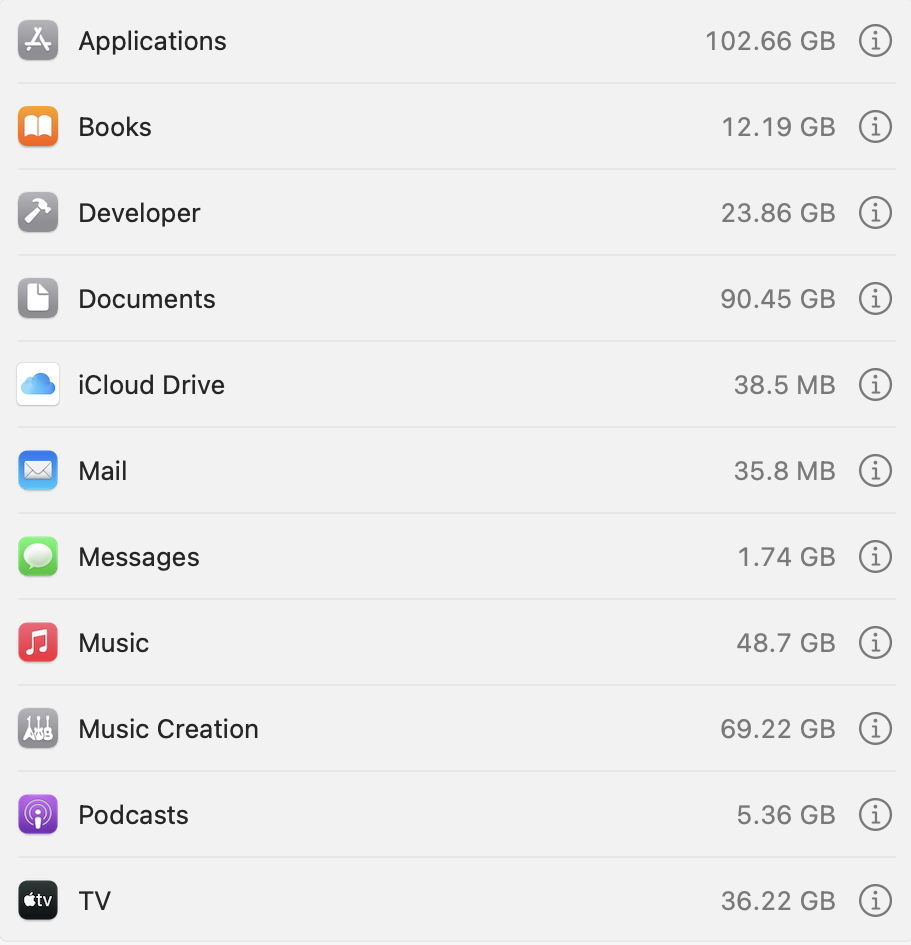
That’s why a 256GB Mac can suddenly feel much smaller than it did when you first unboxed it. The storage itself hasn’t changed. Your digital life has simply grown around it.
What Is “System Data” on a Mac?
System Data is one of those Mac storage categories that can look mysterious because you can’t simply open it and delete a neat list of files. Apple describes it as a general category for files that don’t fit into the more specific storage categories.
Some of that space is completely normal and useful. Some of it may be temporary. And some of the space you are looking at may actually be data created by apps you use every day.
The trick is not to “destroy System Data.” The trick is to find the parts of your own files and app data that no longer need to live on your internal drive.
What About Cache Files?
Caches are temporary files designed to help apps and macOS work more efficiently. They are not automatically junk, and macOS already manages many caches itself. When storage gets critically low, macOS can also remove certain safe-to-delete caches and logs automatically.
Still, if you are trying to understand why your Mac is running out of room, your user cache folder is a useful place to inspect. Instead of blindly deleting everything, you can first see which cache folders are actually large.
That small distinction matters: find first, delete second. Your Mac deserves a little more care than a giant “Delete All” button.
What Can You Safely Remove?
You can also use System Settings → General → Storage to see Apple’s built-in storage recommendations. If you use iCloud, macOS can help keep files, photos and other content available on demand while reducing the amount stored locally.
Find the Space Hiding in Your Mac
If the storage graph still leaves you wondering what is taking up all that room, Terminal can give you a closer look. The command below does something deliberately simple: it lists the largest folders inside your personal cache directory.
It does not delete anything. It is a storage detective, not a wrecking ball. You can use the result to see whether one or two applications are quietly holding onto a lot of cached data.
Now follow these three simple steps.
Copy the Command
Click the button below to copy the command. It only checks your user cache folders; it does not remove or modify your files.
du -sh ~/Library/Caches/* 2>… | sort -h | …
Paste into Terminal
Open Terminal from Applications → Utilities, then paste the command using:
⌘ Command + V
Don’t worry if Terminal looks a little unfamiliar. You are simply asking macOS to show you which cache folders are using the most space.
Press Enter
Press Enter ↵ and wait a moment for the results.
What This Command Actually Does
The command uses macOS’s built-in du utility to measure folder sizes.
sort puts the results in order, while tail keeps the final
entries so you can focus on the largest cache folders instead of scrolling through a wall
of Terminal output.
Free Up Space Without Sacrificing the Things You Love
A little breathing room can make your Mac feel completely different. Your downloads are under control. Your old projects are somewhere safe. Your photos are where you want them. And that intimidating red storage warning is no longer sitting there every time you open your Mac.
If you need more room, you don’t necessarily need to buy a new Mac. Move large libraries to an external drive, use iCloud for files and photos when it fits your workflow, remove old downloads and applications, and let macOS handle the system files it is designed to manage.
The goal is not an empty drive. The goal is a Mac with enough space to breathe — and enough room left for the things you actually want to create, save and enjoy.
Still Not Sure What’s Taking Up Your Storage?
If System Data is unusually large, your storage keeps filling up, or you simply don’t want to dig through folders and backups yourself, getting a closer look can save a lot of time. A careful cleanup should always start with understanding what is there, not with deleting everything in sight.
Your Mac should feel spacious again. Sometimes all it needs is a little digital breathing room.